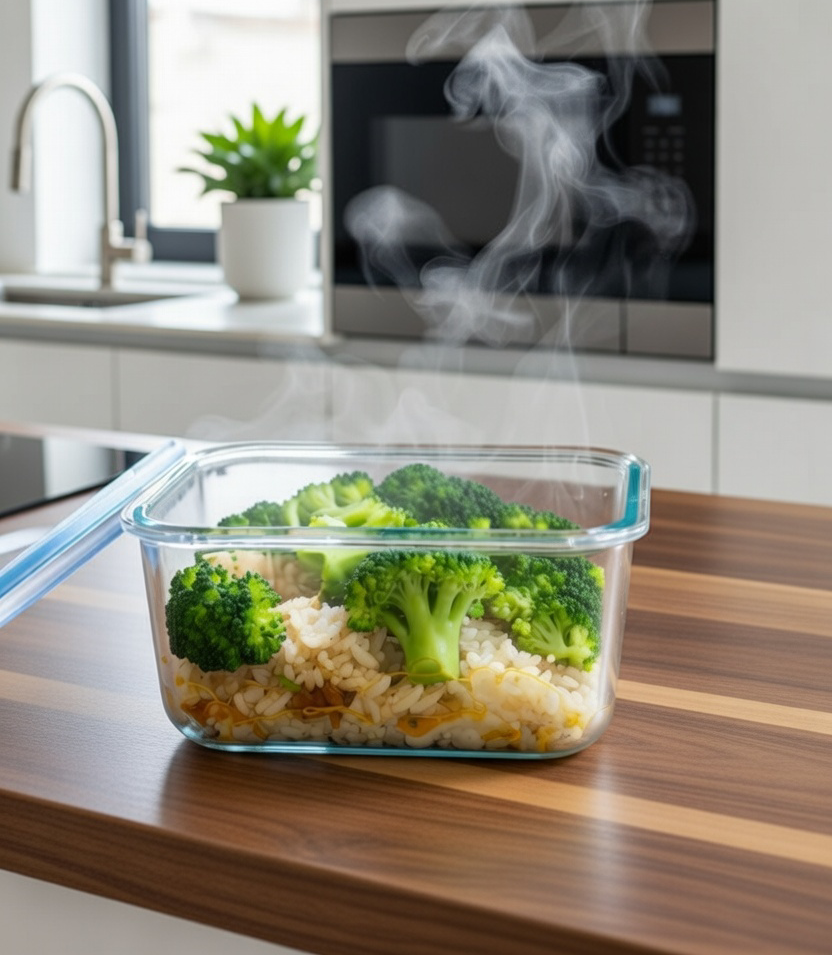
Microwaving food in plastic containers is common in many households. Convenience and speed often make it the default option for reheating leftovers.
At the same time, questions frequently arise about whether heat can cause plastic to release unwanted substances into food. The topic can be confusing, especially with labels such as “microwave safe” appearing on many products.
This article explains what happens when plastic is heated, what current labeling means, and how to reduce unnecessary exposure in practical ways.
Why People Question Microwaving Plastic
Concerns about microwaving plastic usually center around the possibility of chemical migration. When plastic is exposed to heat, some components may break down or move more easily into surrounding food.
Public awareness has increased over the past decade due to discussions about substances such as bisphenols and certain additives used in plastic production. Even when products are labeled as safe, many consumers remain uncertain about what that safety standard actually covers.
The combination of heat, repeated use, and food contact leads many people to question whether alternative materials may offer a more stable option for reheating meals.
What Happens to Plastic When It Is Heated?
Plastic is made from polymers combined with various additives that provide flexibility, durability, color, or resistance to heat. When plastic is exposed to higher temperatures, its structure can soften or change slightly depending on the type of plastic used.
Heating does not automatically mean harmful substances are released in significant amounts. However, higher temperatures can increase the rate at which small quantities of certain compounds migrate from the container into food. This process is influenced by factors such as the type of plastic, the duration of heating, and whether the food contains fat.
Repeated heating and surface wear may also affect the stability of plastic over time. Scratches, warping, and visible degradation can indicate that a container is no longer performing as intended.
For this reason, understanding both the material and how it is used is important when evaluating microwave safety.
What Does “Microwave Safe” Actually Mean?
A label indicating that a container is microwave safe generally means that the product has been tested to withstand microwave heating without melting or deforming under specified conditions. It does not necessarily mean that no substances migrate into food.
Testing standards typically focus on structural stability and acceptable levels of migration under defined scenarios. However, real world use may differ from controlled testing environments, especially when containers are heated repeatedly, used for high fat foods, or exposed to high temperatures for extended periods.
In practical terms, microwave safe indicates that the container is designed to tolerate microwave heat without obvious damage. It does not imply that the material becomes chemically inert or that migration is completely eliminated.
Understanding this distinction helps frame the issue realistically rather than assuming that a label guarantees zero exposure.
Factors That Increase Risk
Not all microwave use presents the same level of concern. Several factors can increase the likelihood of higher migration from plastic into food.
Higher temperatures generally increase the movement of substances. Heating food for longer periods or using high power settings may therefore increase migration compared to short, moderate heating.
Fatty foods can also influence migration. Certain compounds are more likely to move into oils and fats than into water based foods.
Repeated use is another consideration. Over time, plastic containers may develop scratches, cloudiness, or warping. These signs of wear can indicate reduced structural stability.
Using older containers that are visibly damaged may carry a higher likelihood of material breakdown compared to newer, intact containers.
Being aware of these factors allows for more informed decisions rather than assuming all microwave use carries the same level of exposure.
Practical Ways to Reduce Exposure When Reheating Food
Reducing potential exposure does not require eliminating plastic immediately. Small adjustments can meaningfully lower contact during heating.
Whenever possible, transfer food to glass or ceramic containers before microwaving. This removes direct plastic contact during high temperature reheating.
If plastic must be used, avoid heating fatty foods for extended periods and replace containers that show visible wear, warping, or scratching.
Allowing food to cool slightly before sealing it in plastic containers can also reduce prolonged heat contact.
For households looking to move away from microwaving plastic entirely, switching to glass containers for home use is often a practical first step. A detailed comparison of glass and stainless steel storage options can help determine which material fits different situations best.
A Balanced Conclusion
Microwaving plastic containers is common and, when used as intended, generally falls within regulated safety limits. However, heat can increase the movement of certain substances, especially under repeated or high temperature use.
For individuals aiming to reduce unnecessary exposure, the most practical approach is gradual replacement. Using glass or ceramic containers for reheating, avoiding visibly worn plastics, and limiting high heat contact are simple adjustments that can reduce contact over time.
The objective is not to create alarm, but to make informed choices based on how materials behave under heat. Small, consistent improvements in daily habits tend to be more effective than extreme changes.
Leave a Reply